This is My Story
“I was born and raised in Garland, Texas; a manufacturing-based suburb of Dallas. My parents’ heritage is rooted south of the US border: my mother was born in Allende located in Coahuila, Mexico. My father, born in Santa Maria, Texas, grew up in Tampico situated within Tamaulipas, Mexico. The tenacity of my eight aunts in the face of personal tragedies and adversities was an early inspiration; their narratives contributed to my embrace of feminist ideology.”
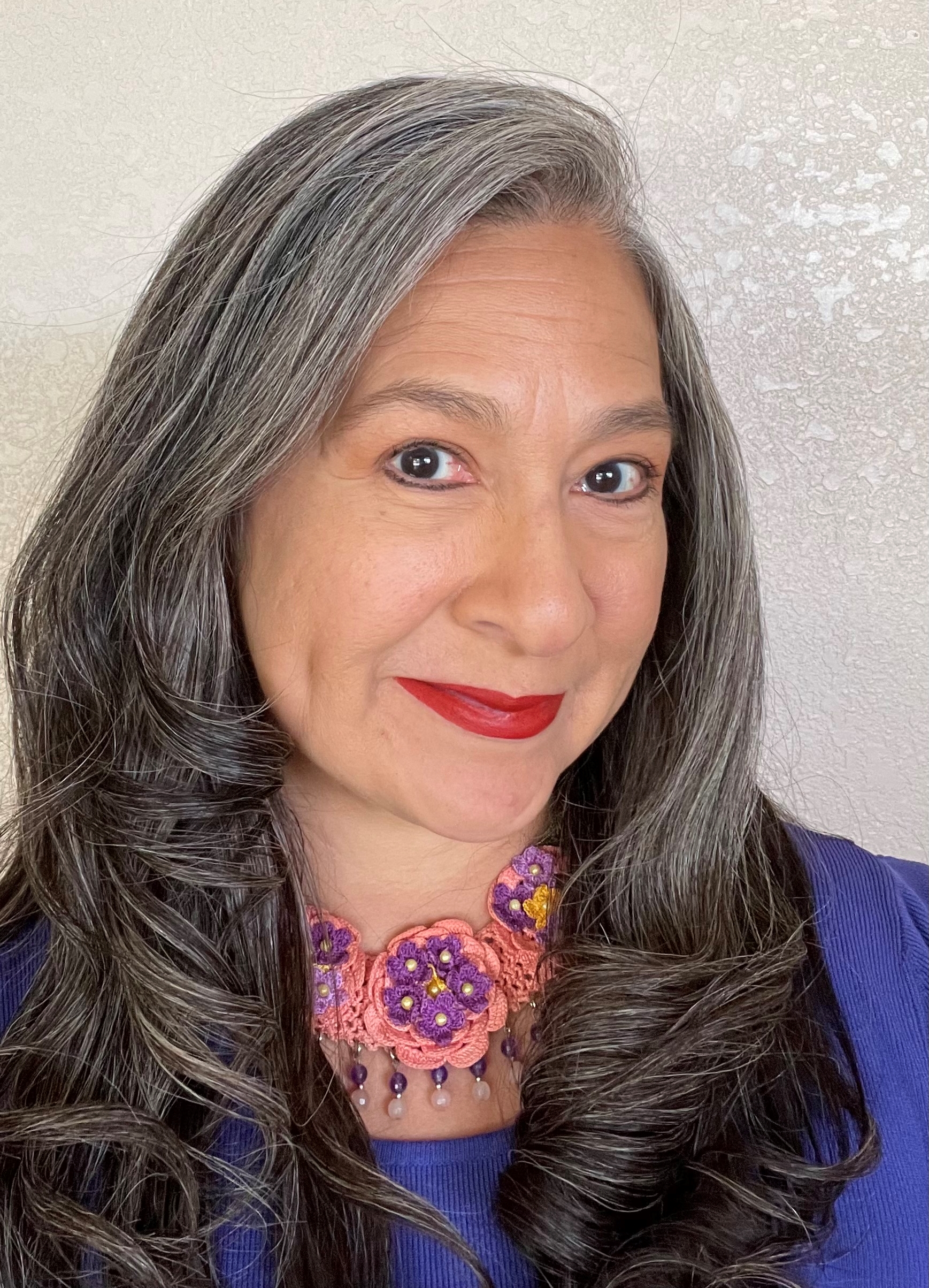
Rosemary Meza-DesPlas is a feminist artist and cultural investigator with an expansive creative practice that centers material culture within gendered narratives. Fiber art, drawing, installation, painting, performance art, and video art reflect imagery of the feminine.
An American/Spanish/Indigenous artist, Meza-DesPlas’ artwork is informed by a bicultural perspective shaped by literary writings on cultural criticism, sociology of culture and cultural advocacy.
Amplifying the voices of women, her work reflects the female experience. The tenacity of her eight aunts in the face of personal tragedies and adversities was an early inspiration; their narratives contributed to her embrace of feminist ideology.
In 2022, she was honored with a Latinx Artist Fellowship by the Mellon Foundation and the Ford Foundation. She was awarded a Fulcrum Fund grant to create a new performance artwork: Miss Nalgas USA 2022. Her artwork was featured in PROArtes Mexico’s Aqui & Alla, Conversations with Creators from Mexico and the USA.
Her work has been exhibited at Museum of Sonoma County, Marin Museum of Contemporary Art, Art Museum of Southeast Texas, Spartanburg Art Museum, and New Mexico Museum of Art. Meza-DesPlas received a BFA from the University of North Texas and an MFA from the Maryland Institute College of Art.
She maintains a studio in Farmington, New Mexico.
Artist Statement
As a multidisciplinary artist, I create figurative artworks exploring the intersection of gender inequality, political agency, and cultural misconceptions. Challenging beauty standards, the feminine body is portrayed with attention to veracity. Portraiture work emphasizes the mutable nature of the face. My studio practice varies from labor intensive hand-stitched hair art to large on-site, multimedia installations.
Feminism and ethnicity are referenced in a common material, human hair, employed in my studio practice. I sew with the first fiber: hair. My sewing can be contextualized within the 1970s women’s craft movement, yet I stitch hair from a drawing-based background. The hair serves as an archive of my body and reflects the aging process. A carrier of DNA, hair symbolizes ethnicity and race.
Identity and culture manifest in my traditional art forms of painting and drawing. Displayed multiples create sizable and organized installations. Through appropriation, these traditional media works are reinvented into specialty fabrics and embedded into performance art and video.
I forefront myself in the performance art and video works; thereby, alluding to the multiplex experience of being an American Latina woman. My poetry anchors the performance art and video works. Academic research and writings reinforce the thematic inquiries into gender topics, socio-political issues, and cultural stereotypes.